
Understanding Relevance AI: A Brief Overview
In the growing landscape of artificial intelligence platforms, Relevance AI stands out as a no-code AI workspace designed to help businesses make sense of unstructured data. It focuses on enabling users to analyze text, images, and other forms of non-tabular data with ease, offering tools that can be applied across various industries, including customer experience, marketing relevance ai reviews, product development, and operations. By allowing users to automate tasks like sentiment analysis, clustering, and data labeling without writing complex code, Relevance AI empowers both technical and non-technical teams to leverage AI in practical ways. Its user interface is centered around simplicity and speed, with drag-and-drop modules and pre-built workflows that accelerate insight generation. These capabilities make it particularly appealing for startups, agencies, and enterprise teams looking for scalable and efficient AI-driven solutions.
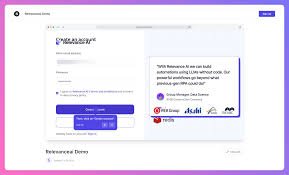
Core Features That Drive Relevance AI’s Popularity
Relevance AI has gained traction largely because of its comprehensive set of tools tailored to modern data challenges. One of its most praised features is its Vector AI engine, which allows users to organize and search large datasets using vector embeddings, making it incredibly efficient at discovering patterns in qualitative data. It also supports multimodal analysis, allowing users to work with a combination of text, image, and numerical data. Beyond that, the platform includes easy-to-use dashboards, integrations with tools like Slack, Zapier, and Google Sheets, and a suite of customizable templates for different use cases, from customer feedback analysis to competitive research. Another highlight is its collaborative workspace model, which makes it easier for teams to share projects and findings without relying on external platforms or engineering support. These features combine to offer a well-rounded, accessible entry point into the world of AI-powered data analysis.
User Experience and Community Feedback
When it comes to user reviews, Relevance AI receives generally positive feedback across major platforms such as G2, Product Hunt, and Capterra. Users frequently mention the platform’s intuitive interface and time-saving automation capabilities as major advantages. Many non-technical users praise how easy it is to build workflows and generate actionable insights without needing to understand machine learning algorithms in depth. On the flip side, some reviewers note that while the platform is powerful, the documentation could be more detailed, especially for users who want to customize or extend their workflows beyond the provided templates. Enterprise users sometimes express a need for more granular control over data privacy and model customization, which the Relevance AI team has been reportedly working to improve. Overall, the general sentiment is that Relevance AI strikes a balance between usability and functionality, especially for teams that need fast turnaround times for data analysis projects.
Comparisons with Other AI Tools on the Market
In the broader competitive landscape, Relevance AI is often compared to platforms like MonkeyLearn, DataRobot, and Hugging Face. While each tool has its strengths, Relevance AI’s differentiator lies in its low-code/no-code approach and focus on unstructured data processing. For example, MonkeyLearn also offers text analysis tools but leans more toward structured feedback systems, while Hugging Face provides a wide array of pre-trained models but requires more programming knowledge to implement. Relevance AI positions itself in the sweet spot where power meets accessibility, making it particularly attractive for business teams that want actionable insights without hiring a dedicated data science team. Its ability to visualize and categorize large data sets with minimal setup time allows users to focus more on strategic decision-making rather than technical execution.
Final Thoughts: Is Relevance AI Worth It?
Relevance AI is clearly designed with modern business needs in mind, offering a blend of automation, customization, and ease of use. Its ability to handle unstructured data and generate meaningful insights makes it a valuable tool for companies aiming to become more data-driven without incurring high development costs. While there is room for improvement in documentation and enterprise-level controls, the platform’s roadmap and active development indicate that these concerns are being addressed. For teams seeking to integrate AI into their workflows without steep learning curves, Relevance AI proves to be a strong contender in the space. Its positive reviews from users across different sectors suggest that it delivers on its promise of making AI more accessible and effective for everyone.

Leave a Reply